
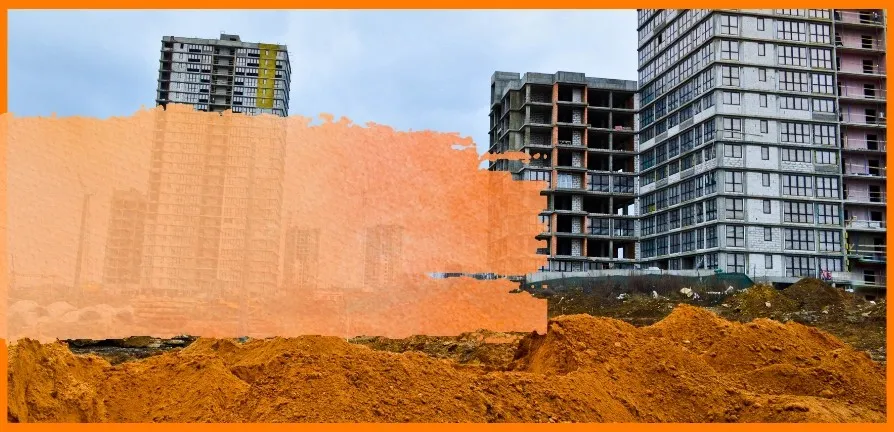
Every skyline tells a story. Behind every high-rise, mixed-use corridor, or master-planned neighborhood lies a decision made long before the first shovel hit the ground: a decision about infrastructure. In commercial real estate development, it is the single most consequential factor that determines whether a project succeeds brilliantly or stalls catastrophically.
Whether you are a seasoned real estate investment professional, exploring real estate development positions, or simply curious about how real estate developers build communities from the ground up, this guide will walk you through why infrastructure planning is non-negotiable, and why it is the backbone of every successful residential and commercial real estate development project.
What Is Infrastructure Planning in Real Estate Development?
Infrastructure planning in real estate development refers to the strategic design and preparation of the essential systems that make a property functional, livable, and legally compliant. This includes roads and transportation access, utility connections (water, sewer, gas, electricity), stormwater management, broadband and digital connectivity, and green space allocation.
For a residential real estate developer, this might mean planning cul-de-sac layouts, utility easements, and community green corridors. For those focused on commercial real estate infrastructure planning, it scales up to include loading dock access, fiber-optic readiness, zoning-compliant parking structures, and multi-modal transit nodes.
In both cases, the principle is the same: infrastructure defines what is possible. It is not a finishing detail it is the framework upon which everything else is built.
The Business Case: Why Infrastructure Drives Commercial Real Estate Development ROI
Savvy investors in real estate investment know that location is only half the equation. The other half? Infrastructure capacity and readiness. A parcel with strong bones, well-planned utilities, road access, and entitlements commands a premium because it reduces development risk and accelerates timelines.
Here is what poor infrastructure planning costs developers in the real world:
- Permitting delays of 6–18 months due to unanticipated utility conflicts
- Cost overruns of 15–30% when underground infrastructure must be relocated mid-project
- Reduced lease rates in commercial properties with inadequate parking or loading zones
- Community opposition triggered by stormwater or traffic impact failures
- Financing complications when lenders flag infrastructure risk in due diligence
Investing early in commercial real estate infrastructure planning is not an added cost, it is risk mitigation with a measurable return. Projects that front-load infrastructure analysis consistently outperform those that discover problems mid-construction.
Residential vs Commercial Real Estate Development: Infrastructure Differences
Understanding the distinction between residential vs commercial real estate development is essential when evaluating infrastructure requirements. These two sectors share common principles but diverge significantly in scope and complexity.
Residential Real Estate Development
For a residential real estate developer, infrastructure planning centers on livability and community cohesion. Key priorities include:
- Domestic water supply and wastewater capacity
- Safe pedestrian connectivity and road hierarchy
- Electrical load calculations per dwelling unit
- Green space, parks, and recreational corridors
- School district and emergency services proximity
Residential projects often work within existing municipal infrastructure frameworks, but as density increases think townhomes, apartment complexes, and mixed-use residential the infrastructure burden can exceed legacy system capacity and require developer-funded upgrades.
Commercial Real Estate Development
Commercial real estate development introduces a different tier of complexity. Industrial parks need heavy-load road surfaces and rail access. Retail centers require high-capacity parking structures and signalized intersections. Office campuses demand redundant power systems and next-generation digital infrastructure.
In each case, the commercial developer must anticipate not just current need, but future demand. The infrastructure installed today must support the business operations and the Real Estate Services that clients require for the next 20 to 30 years.
How Real Estate Developers Build Communities Through Smart Infrastructure
One of the most misunderstood aspects of real estate development is its impact beyond the property line. When developers invest thoughtfully in infrastructure, they are not just building buildings, they are shaping communities.
Smart infrastructure decisions ripple outward:
- Walkable street networks encourage foot traffic that benefits local businesses
- Green stormwater infrastructure improves neighborhood aesthetics and environmental health
- Broadband-ready buildings attract remote workers and knowledge-economy employers
- Mixed-use zoning with proper utility backbone enables diverse, resilient neighborhoods
- Transit-oriented development reduces car dependency and increases property values
This is precisely how real estate developers build communities not through aesthetics alone, but through the invisible systems that determine quality of life, economic opportunity, and long-term neighborhood sustainability.
The Benefits of Real Estate Development Projects: Infrastructure as a Community Asset
The benefits of real estate development projects extend far beyond the developer’s profit margin. When executed with rigorous infrastructure planning, development projects become community assets with lasting economic and social impact.
Economic Benefits
- Job creation during construction and post-occupancy phases
- Increased tax base from developed parcels vs. vacant land
- Attraction of businesses, retailers, and service providers
- Rising adjacent property values through neighborhood improvement
Social and Environmental Benefits
- Improved access to housing, employment, and services
- Green infrastructure that manages stormwater and reduces urban heat
- ADA-compliant design that serves all community members
- Preserved open space integrated into development plans
The developers who understand this broader impact and plan infrastructure accordingly are the ones who earn project approvals faster, face less community resistance, and build a reputation that fuels future business real estate development opportunities.
Key Infrastructure Phases in a Real Estate Development Project
A well-executed commercial real estate development project follows a phased infrastructure approach. Understanding these phases helps both developers and real estate investment professionals evaluate project viability and timeline.
Phase 1 Site Assessment and Due Diligence
Soil testing, topographic surveys, utility mapping, environmental impact assessments, and preliminary traffic studies form the foundation. This phase determines feasibility and flags potential cost drivers early.
Phase 2 Entitlements and Permitting
Infrastructure commitments are negotiated with municipalities, utility providers, and transportation authorities. Developers often agree to fund off-site improvements, road widening, signal upgrades, sewer extensions as conditions of approval.
Phase 3 Design and Engineering
Civil engineers design the grading plan, utility layouts, retention systems, and access points. This is where the infrastructure vision becomes construction-ready documentation.
Phase 4 Construction and Commissioning
Infrastructure is typically built before vertical construction begins. Utilities are trenched and connected, roads are graded and paved, and systems are tested and commissioned before the building rises above grade.
Phase 5 Long-Term Management
Infrastructure has a lifecycle. Developers who offer ongoing Real Estate Services including property management and capital planning help owners maintain infrastructure health and protect asset value over time.
Why Trust Connolly Companies for Real Estate Development?
Connolly Companies has spent decades navigating the full spectrum of commercial real estate development from raw land acquisition through stabilized asset management. Our team includes civil engineers, urban planners, licensed contractors, and real estate investment strategists who collaborate on every project from Day 1.
Our infrastructure-first philosophy has helped us deliver projects on time, within budget, and with community support that accelerates approvals. We do not treat infrastructure as an afterthought; it is the first conversation we have on every engagement.
From business real estate development in urban infill sites to large-scale residential real estate developer projects in growth corridors, Connolly Companies brings the expertise, relationships, and process discipline needed to get infrastructure right.
- Decades of commercial and residential project delivery experience
- In-house civil and environmental engineering capabilities
- Deep municipal and utility relationships across key markets
- Transparent client communication through every infrastructure phase
- A track record of on-time, on-budget project delivery
Frequently Asked Questions
Q1: What is the most critical infrastructure component in commercial real estate development?
Utility capacity particularly water, sewer, and electrical is the most critical infrastructure component in commercial real estate development. Without adequate utility supply, no commercial project can achieve occupancy approval or meet tenant operational requirements, regardless of how well everything else is executed.
Q2: How does infrastructure planning affect real estate investment returns?
Infrastructure planning directly affects real estate investment returns by reducing risk, shortening timelines, and increasing lender confidence. Projects with well-documented infrastructure strategies attract better financing terms, experience fewer cost overruns, and achieve stabilization faster all of which improve net returns for investors.
Q3: What are the biggest differences between residential vs commercial real estate development infrastructure?
In residential vs commercial real estate development, residential infrastructure focuses on livability and community connectivity, while commercial infrastructure emphasizes load capacity, access logistics, redundancy, and future scalability. Commercial projects typically involve more complex utility negotiations and greater off-site improvement obligations.
Q4: How do real estate developers build communities through infrastructure decisions?
Real estate developers build communities through infrastructure decisions by creating walkable streets, connected utilities, and green systems that determine daily quality of life. Well-planned infrastructure supports local businesses, reduces car dependency, manages environmental impact, and creates the conditions for inclusive, economically vibrant neighborhoods.
Q5: What are the primary benefits of real estate development projects for surrounding neighborhoods?
The primary benefits of real estate development projects for surrounding neighborhoods include increased tax revenue, job creation, improved infrastructure serving existing residents, new retail and service options, and rising property values. Thoughtful infrastructure investment by developers creates lasting community assets that generate positive returns for years after project completion.
Final Thoughts
Infrastructure is the invisible architecture of real estate development rarely photographed, seldom celebrated, but always foundational. In commercial real estate development, getting infrastructure planning right is the difference between a project that delivers on its promise and one that disappoints investors, delays occupants, and frustrates communities.
Whether you are evaluating real estate development positions, seeking Real Estate Services for a new project, or making a real estate investment decision, infrastructure readiness should be at the top of your evaluation criteria.
The best developers, the ones who build lasting assets and earn repeat business understand that the work done before the first shovel hits the ground is what determines everything that comes after.
At Connolly Companies, that is how we have always approached every project. And it is exactly the kind of disciplined, forward-thinking development expertise we bring to every client engagement.
Partner With Connolly Companies Where Infrastructure Meets Vision. Let’s Build Together Schedule a consultation today.